Why Give Your Home an Annual Electrical Safety Checkup?
We schedule routine checkups for ourselves, our cars, and even our heating systems—but the electrical system quietly working behind the walls of our home is easy to forget.
Your home’s electrical system works 24 hours a day, 365 days a year. Over time, outlets wear out, connections can loosen, cords become damaged, breakers may begin tripping, and the way we use electricity in our homes changes.
An annual electrical safety checkup gives you a chance to notice those little warning signs before they become bigger problems.
The good news? You don’t need to be an electrician to keep an eye on many of the basics.
In this guide, we’ll walk through simple things homeowners can check throughout the year, including outlets, GFCIs, smoke and carbon monoxide alarms, extension cords, outdoor electrical equipment, generators, and more.
And just as importantly, we’ll talk about what you should leave to a licensed electrician.
Start With the Things You Can See
You don’t need to open your electrical panel or take anything apart to give your home a basic electrical safety checkup.
In fact, some of the most useful checks are simply about looking, listening, smelling, and paying attention to changes around your home.
Take a walk from room to room and look at the electrical items you use every day.
Watch for:
- Outlets or switches that feel warm
- Loose, cracked, or damaged outlets and cover plates
- Lights that flicker or dim unexpectedly
- Buzzing or unusual sounds from switches, outlets, fixtures, or your electrical panel
- Burning or unusual electrical odors
- Discolored outlets or switches
- Breakers that trip repeatedly
- Outlets that suddenly stop working
- Damaged cords, plugs, or power strips
- Signs of moisture or water damage near electrical equipment
One of these signs doesn’t necessarily tell you exactly what the problem is—but it does tell you that something deserves attention.
And remember: an electrical safety checkup is about observing, not taking things apart.
If something looks, smells, sounds, or feels wrong, that’s the point where you stop investigating and let a licensed electrician determine what’s happening.
Test Your GFCI Outlets
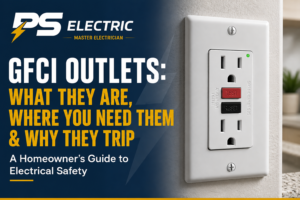
GFCI outlets are designed to help protect you from electrical shock by shutting off power quickly when they detect a ground fault.
You’ll commonly find them in areas where electricity and water may be close together, including kitchens, bathrooms, garages, basements, laundry areas, and outdoor locations.
Testing them is an easy homeowner safety check.
Plug in a small lamp or other device and turn it on. Then press the TEST button on the GFCI outlet.
The power should shut off.
Next, press the RESET button. The power should come back on.
If the outlet doesn’t trip, won’t reset, or doesn’t restore power, don’t ignore it. Have it evaluated by a licensed electrician.
Make It an Annual Habit
Even if you haven’t noticed a problem, include your GFCIs in your regular home safety routine.
It only takes a few minutes to walk through the house and test them—and it helps make sure this important safety protection is actually working when you need it.
Don’t Forget Your AFCI Protection
GFCIs and AFCIs are both important electrical safety devices, but they protect against different hazards.
While GFCIs are designed to help protect people from electrical shock, AFCIs—or Arc Fault Circuit Interrupters—are designed to help protect your home from electrical fires.
An arc fault can happen when electricity jumps across a damaged or loose connection. It can be caused by things like damaged wiring, loose connections, or a wire that has been pinched or compromised.
AFCI protection is typically built into certain breakers in your electrical panel, particularly in newer homes or homes that have had electrical upgrades.
Pay Attention to Repeated Tripping
If an AFCI breaker begins tripping frequently, won’t reset, or suddenly starts behaving differently, don’t assume the breaker is simply being annoying.
It may be detecting a problem somewhere on the circuit.
And never replace an AFCI breaker with a standard breaker just to make the tripping stop.
The trip is the warning—not the problem.
If an AFCI repeatedly trips, have a licensed electrician determine what’s causing it before continuing to use that circuit normally.
Check Your Smoke & Carbon Monoxide Alarms
Smoke and carbon monoxide alarms are some of the most important safety devices in your home—but they can only protect your family if they’re working properly.
Take a few minutes during your home safety checkup to test every smoke and CO alarm in the house.
Press the test button and make sure the alarm sounds. If your alarms are interconnected, confirm that the other alarms respond as they should.
Check the age of each alarm, too. Smoke alarms generally need to be replaced after about 10 years, while carbon monoxide alarm replacement schedules can vary by manufacturer. Look for the manufacture or replacement date printed on the unit.
Also make sure you have alarms in the appropriate locations throughout your home, including sleeping areas and every level of the house.
Don’t Just Silence the Chirp
If an alarm is chirping, don’t simply remove the battery and forget about it.
The chirp may be telling you the battery is low, the alarm has reached the end of its useful life, or the unit needs attention.
Your smoke and CO alarms are easy to overlook because most of the time they quietly sit on the ceiling or wall.
That’s exactly why they belong on your regular home safety checklist.
Phil's Tip
Date your Home Electrical Report Card when you complete it, and keep it with your important house paperwork.
A home binder, maintenance folder, or other place where you keep records for your house is perfect.
When you do your safety check again next year, you’ll have something to compare it to—and you’ll be able to see whether anything has changed or needs attention.
A simple yearly record can help you spot changes before they become bigger problems.
Check Your Extension Cords & Power Strips
Extension cords and power strips make it easy to get electricity where we need it—but they can become a safety concern when they’re damaged, overloaded, or used incorrectly.
As you walk through your home, take a look at the cords and power strips you use regularly.
Check for cracked or frayed insulation, damaged plugs, loose connections, scorch marks, or cords that feel unusually warm.
And pay attention to how they’re being used.
Extension cords should be temporary—not permanent wiring. If you have the same extension cord stretched across a room month after month, it may be time to consider having an outlet installed where you actually need one.
Never run extension cords under rugs or carpeting, where damage and overheating can go unnoticed.
And avoid daisy-chaining extension cords or power strips by plugging one into another.
One More Thing to Check
Make sure you’re using the right cord for the location. Indoor extension cords belong indoors, while outdoor use requires a cord specifically rated for outdoor conditions.
If a cord or power strip is damaged, replace it rather than trying to make a permanent repair with electrical tape.
Sometimes the safest electrical upgrade is simply recognizing when a cord has reached the end of its useful life.
Take Your Electrical Checkup Outside
Your home’s electrical system doesn’t stop at the front door. Outdoor outlets, lighting, cords, and electrical equipment are exposed to rain, moisture, temperature changes, landscaping, and everyday wear, so they deserve a regular check too.
Take a walk around the outside of your home and look at your electrical equipment with fresh eyes.
Check your outdoor outlets and weatherproof covers. Covers should be secure and undamaged, and outlets should not show signs of cracking, rust, discoloration, or water damage.
Look over landscape and exterior lighting, including fixtures around porches, decks, walkways, garages, and sheds. Watch for loose fixtures, damaged wiring, broken covers, or lights that suddenly stop working.
If you have a pool, hot tub, or spa, electrical safety becomes even more important because electricity and water are so close together. Any damaged equipment, outlets that won’t reset, or other electrical concerns around these areas should be checked by a licensed electrician.
And don’t forget temporary outdoor power. Make sure extension cords and equipment used outside are actually rated for outdoor use.
Add It to Your Seasonal Routine
Spring and fall are great times to do this quick walk-around.
You don’t need to take anything apart or troubleshoot electrical equipment yourself. You’re simply looking for visible changes or damage that may need attention.
A five-minute walk around your property can help you spot a small electrical problem before weather and time turn it into a bigger one.
Is Your Generator Ready for an Outage?
A generator can make a power outage much easier to manage—but only if it’s ready to work before you need it.
Don’t wait until a storm is approaching to discover that your generator won’t start, the fuel is old, or you’re not sure how to safely connect it to your home.
As part of your annual electrical safety checkup, ask yourself:
- Have I tested my generator recently?
- Is the fuel fresh and stored properly?
- Do I know what I want the generator to power?
- Do I know how to connect it safely?
- Does my home have a properly installed transfer switch?
Why a Transfer Switch Matters
A portable generator should never be connected to your home in a way that can send electricity back through the utility lines.
A properly installed transfer switch safely separates your home from the utility while allowing the generator to power selected circuits. This helps protect your home, your generator, and utility workers restoring power in your neighborhood.
If you already own a generator but aren’t sure whether your setup is safe, Phil can evaluate what you have and explain your options.
Storm season isn’t the time to figure out your backup power plan. A little preparation now can make a future outage much less stressful.
Seasonal Electrical Safety: Your Home Changes With the Weather
Electrical safety isn’t exactly the same all year long. As the seasons change, so do the ways we use electricity around our homes.
In spring, take a walk around your property after winter weather. Check outdoor outlets, covers, lighting, and cords for anything that may have been damaged by snow, ice, moisture, or storms.
In summer, pay extra attention around pools, patios, outdoor projects, power tools, and extension cords. Electricity and water are never a safe combination, so outdoor electrical equipment deserves an extra look.
In fall, inspect landscape lighting and outdoor outlets while you’re cleaning up the yard. It’s also a good time to start preparing your home for colder weather and possible power outages.
And in winter, we bring out space heaters, holiday lights, and generators—all of which can place additional demands on your home’s electrical system.
A Special Reminder About Space Heaters
Space heaters should always be plugged directly into a wall outlet—never into an extension cord or power strip.
Keep plenty of space around the heater, and don’t leave it running unattended.
You don’t need to turn seasonal electrical safety into a major project. Simply getting into the habit of looking around your home as your routines change can help you spot small problems early.
Different season, different electrical needs—but the goal is the same: keeping your home and family safer all year long.
Know the Warning Signs: When to Call an Electrician
Your home’s electrical system will often give you clues when something isn’t working the way it should.
Some warning signs may seem small at first, but they’re worth paying attention to—especially if they happen repeatedly.
Watch for:
- Flickering or dimming lights
- Outlets or switches that feel unusually warm
- Buzzing or humming sounds from outlets, switches, fixtures, or your electrical panel
- A burning or unusual electrical smell
- Circuit breakers that trip repeatedly
- Dead outlets that suddenly stop working
- Loose outlets or switches
- Water damage near electrical equipment, outlets, switches, or fixtures
A breaker that trips once because you plugged in too many things is different from a breaker that keeps tripping without an obvious reason. Repeated problems are your electrical system’s way of telling you something needs attention.
The same is true for flickering lights or an outlet that suddenly stops working. Rather than repeatedly resetting a breaker or ignoring the problem, have the cause identified.
If something doesn’t look, sound, smell, or feel right, don’t ignore it.
Electrical problems are much easier to address when they’re caught early.
When in Doubt, Let Phil Take a Look
Your annual home electrical checkup is meant to help you spot potential problems—not diagnose or repair them yourself.
If your checkup uncovers something concerning, make a note of it on your Home Electrical Report Card and contact a licensed electrician.
Phil can determine what’s causing the problem, explain what he finds, and let you know whether something needs immediate attention or should simply be monitored.
Make Your Home Electrical Checkup an Annual Habit
Just like changing your smoke alarm batteries or scheduling routine home maintenance, an electrical safety checkup is most useful when you do it regularly.
Choose a time each year that will be easy to remember. It might be every September, at the beginning of spring, around your home’s anniversary—or whenever it naturally fits into your household routine.
Use your Home Electrical Report Card to walk through the same areas each year and make notes about anything you notice.
Over time, those reports can give you a helpful history of your home.
An outlet that seemed fine last year but now feels loose, a breaker that has started tripping occasionally, or lights that have recently begun flickering may be easier to recognize when you have something to compare them with.
Keep Your Report Cards
Don’t throw away last year’s report when you complete a new one.
Date each Home Electrical Report Card and keep it with your other important house paperwork.
A home binder, maintenance folder, or file containing warranties, repair records, permits, appliance information, and other household documents is a great place for it.
You’re creating a simple electrical safety history for your home—one that can help you notice changes, remember previous concerns, and keep track of electrical work that has been completed.
A few minutes once a year can help you stay ahead of small electrical concerns before they become bigger problems.
Download Your Free Home Electrical Report Card
Ready to give your home its annual electrical safety checkup?
We created a free Home Electrical Report Card to help you walk through your home, room by room, and keep track of what you find.
Use it during your annual checkup to record items that are working properly, make notes about anything you want to keep an eye on, and identify concerns that may need to be evaluated by a licensed electrician.
When you’re finished, date your Report Card and save it with your other important home records. Bring it back out next year and you’ll have something to compare with your new checkup.
Over time, you’ll be building a simple electrical safety history for your home.
Your home takes care of your family every day. A yearly electrical checkup is one small way to take care of it, too.
No email required. Just download, print, and start your annual home electrical safety checkup.
Did Your Checkup Find Something That Needs Attention?
Finding a problem doesn’t necessarily mean you need a major electrical repair. Sometimes it’s a worn outlet, a loose connection, an aging device, or another relatively simple issue.
The important thing is not ignoring a warning sign once you’ve found it.
If your Home Electrical Report Card uncovered something you’re concerned about, Phil can take a closer look and determine what’s actually going on.
PS Electric provides residential electrical service throughout Rhode Island, including electrical safety inspections, troubleshooting, repairs, panel upgrades, smoke and CO alarm upgrades, surge protection, and other electrical safety improvements.
You don’t have to diagnose the problem yourself. That’s Phil’s job.
Stay safe,
Phil & Christy St. Clair
PS Electric
QUICK ANSWER
Yes—your home’s electrical system deserves a regular safety checkup. Simple homeowner checks throughout the year can help you spot damaged equipment, warning signs, and potential safety concerns before they become emergencies.
FREE HOME SAFETY RESOURCES
Keep learning with our Safe Homes & Healthy Living Resource Library.
Get free access to electrical safety lessons, printable handouts, homeowner checklists, and practical resources created to help you make your home safer.